
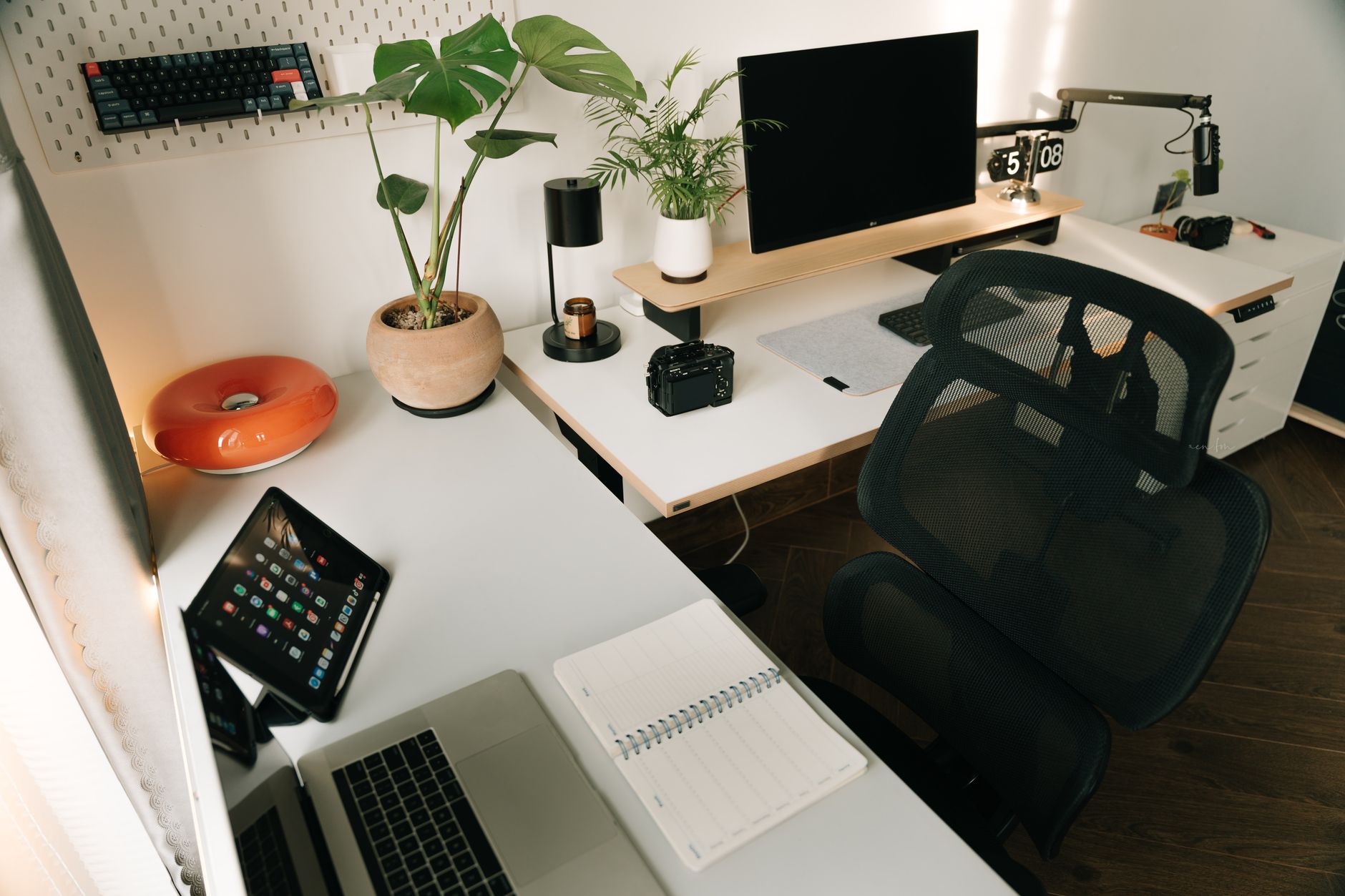
Good home office setup ideas start with a tape measure, not a shopping basket. The home office setup ideas that work in a UK terrace, a 1930s semi or a new-build box room are the ones built around a 2.1m wall, a sloping ceiling or the corner of a spare bedroom. A comfortable, permanent desk area usually lands between £350 and £900 once you include a chair, a monitor and a decent lamp, and the split matters more than the total. Before ordering anything, spend a week noticing three things: where daylight falls at 10am and 3pm, how far you sit from the router, and what noise travels through the party wall. Those three facts shape your comfort far more than the finish on the desktop. What follows is a build order with real measurements, GBP prices and the trade-offs that show up after a month of full days.
Start With the Room, Not the Furniture Catalogue
Daylight beats any lamp, but direction decides everything. A desk facing a window puts glare straight onto the screen; a desk with the window to your left or right gives even light without silhouetting your face on calls. North-facing rooms hold steady light all day and rarely overheat during a July heatwave.
Measure the usable wall rather than the room. A 120cm desk needs roughly 140cm of clear run once skirting boards, radiator pipes and a door swing are accounted for. In a 2.4m box room, a 100cm desk on the short wall still leaves a 90cm walkway, the practical minimum for pushing a chair back.
Check the quiet before you check the square footage. Boilers, road frontage and shared walls all intrude by mid-afternoon. If the calmest room is also the coldest, budget £30 for an oil-filled radiator and £15 for draught excluders; heating one small room through winter costs far less than warming the whole house.
Box Rooms, Landings and Under-Stairs Corners
A landing nook of 90cm by 60cm takes a wall-mounted fold-down desk and a stool, which suits two-hour bursts rather than eight-hour days. Under-stairs positions need a seated headroom check: below about 110cm above the seat pad, the space starts to feel like a cupboard and posture suffers.
Desks and Chairs: Where the Budget Actually Goes
Split the budget roughly 45 per cent chair, 30 per cent screen, 25 per cent desk. A £70 flat-pack desk with a solid 18mm top holds a monitor arm perfectly well, while a £70 chair becomes uncomfortable within a fortnight. Spend the money where your body makes contact for eight hours a day.
Height matters more than width. A standard UK desk sits at 72cm to 75cm, which suits people around 175cm tall; anyone shorter needs a footrest or an adjustable frame. Sit-stand frames start near £180 and pair with a £40 worktop, which undercuts most branded sit-stand desks by roughly half.
Second-hand office chairs are the strongest value in the UK market. Refurbished Herman Miller Aeron or Steelcase Leap models change hands for £250 to £450, about a third of new, and both carry replaceable parts. A new £150 mesh chair with adjustable arms and lumbar support is the sensible floor.
| Item | Budget | Mid-range | What you gain |
|---|---|---|---|
| Desk | £70-£120 | £200-£350 | Solid top, cable tray, stable at 140cm |
| Chair | £150 | £280-£450 | Seat depth, lumbar and arm adjustment |
| Monitor | £110 (24in) | £220-£300 (27in QHD) | Sharper text, far less squinting |
| Task lamp | £25 | £70-£90 | Dimming and adjustable colour temperature |
| Monitor arm | £30 | £90-£130 | Reclaimed desk depth, correct eye height |
Chair First, Desk Second
If the money only stretches to one good purchase, make it the chair. A desk failure shows up as wobble; a chair failure shows up as lower-back pain that lingers into the evening. Test seat depth by leaving two fingers of clearance between the seat edge and the back of your knee.
Lighting, Screen Height and Sound Control
The most overlooked of all home office setup ideas is light. Aim for two sources: ambient light from the ceiling and a task lamp of about 500 lumens angled away from the screen. Colour temperature near 4000K keeps text crisp without the blue cast of cheap LED panels.
Set the top of the screen level with your eyebrows and roughly an arm’s length away. Most laptop users sit 15cm too low, which pulls the neck forward and tightens the shoulders. A £30 riser plus a separate keyboard corrects that for less than the cost of one physiotherapy session.

Soft surfaces beat gadgets for sound. A rug, lined curtains and a loaded bookshelf against the shared wall cut echo noticeably on calls. If footfall from upstairs carries, a £60 cardioid USB microphone pointed away from the ceiling does more real work than any software noise suppression.
Broadband, Power and Cable Management
Wi-Fi drops off sharply through stone and thick Victorian walls. A single flat Cat6 cable run along the skirting to the desk delivers a stable 300Mbps or more and removes the mid-call stutter that mesh systems tend to mask rather than fix. Ten metres of cable costs about £12.
One extension lead behind a desk is fine; three daisy-chained is a fire risk. Fit a surge-protected six-way at around £20, mount it under the desk with adhesive brackets, and leave one socket free for charging. Label the plugs with masking tape so you can pull the right one quickly.
Cable management is not decoration; it protects chair castors and flooring. A £15 under-desk tray and a handful of velcro ties keep leads off the carpet. Roll the chair through its full range and test every lead before you screw anything permanently into the wall or skirting board.
Building a Working Day Around Local Life
A desk at home only works if the day has edges. The strongest habit is a fixed midday break away from the screen, and a small town makes that easy: a river path, a green, or one of the dog walking parks near me that neighbours swap on local groups, ideally within a ten-minute walk.
Evening hobbies stop the room swallowing the house. UK allotment gardening has surged in popularity, and most parish waiting lists run one to three years, so registering early costs nothing. Plot holders active in allotment gardening UK groups tend to trade seedlings and surplus courgettes rather than buying everything in.
Weekends benefit from a short planning slot at the same desk. Twenty minutes with a notebook covers a seasonal shortlist of the best UK travel destinations, a scan of Hays Travel destinations from UK regional airports, and two great British baking recipes worth attempting before the weather turns.
- Midday reset: 25 minutes outdoors, rotating the same two or three parks for dog walking near me instead of deciding fresh each day.
- Thursday planning: compare travel destinations in UK counties reachable by train, so a Friday finish becomes a proper weekend.
- Seasonal shortlist: keep a running note of the best travel destinations UK families return to, from Northumberland beaches to the Gower.
- Sunday batch: pick two British baking recipes and bake while the laundry runs, so Monday starts with something other than a screen.
- Quarterly reset: strip the desk, wipe the cables, and review which UK travel destinations you actually booked against the ones you listed.
How Much Should a Home Office Setup Cost in the UK?
A functional setup lands between £350 and £900. A realistic mid-range build is £150 for a chair, £110 for a 24-inch monitor, £90 for a desk, £30 for a monitor arm and £25 for a task lamp, leaving headroom for cables and a footrest. Spending under £250 usually means a chair that gets replaced within a year, which costs more across two years than buying properly once. Above £1,200 you are largely paying for finish rather than comfort, unless you genuinely need a sit-stand frame or a second screen. The most effective home office setup ideas prioritise the chair and screen height first, then upgrade the desk later.
Is a Garden Office Worth the Money for Remote Work?
For full-time remote work in a house with no spare room, often yes, but the numbers deserve checking first. An insulated 3m by 2.5m pod costs £8,000 to £15,000 supplied and fitted, plus £800 to £1,500 for an armoured power feed from the consumer unit. Structures under 2.5m high and sited within permitted development limits usually avoid a planning application, though conservation areas and listed properties follow different rules, so a short call to the district planning team saves trouble. Expect it to add value only if it is properly insulated, heated and dry; an uninsulated summerhouse becomes unusable from November onwards.
What Is the Best Desk Position in a Small Box Room?
In a room of roughly 2.1m by 2.4m, place the desk against the shorter wall with the window to one side. That keeps glare off the screen, avoids sitting with your back to the door, and preserves a 90cm walkway for the chair. Corner desks look efficient on paper but waste the deep triangle behind the join and encourage a twisted sitting position over long sessions. If the radiator occupies the only usable wall, leave a 15cm gap so heat is not trapped beneath the desktop, and add a wall-mounted shelf above rather than a floor unit that eats into the walkway.
