
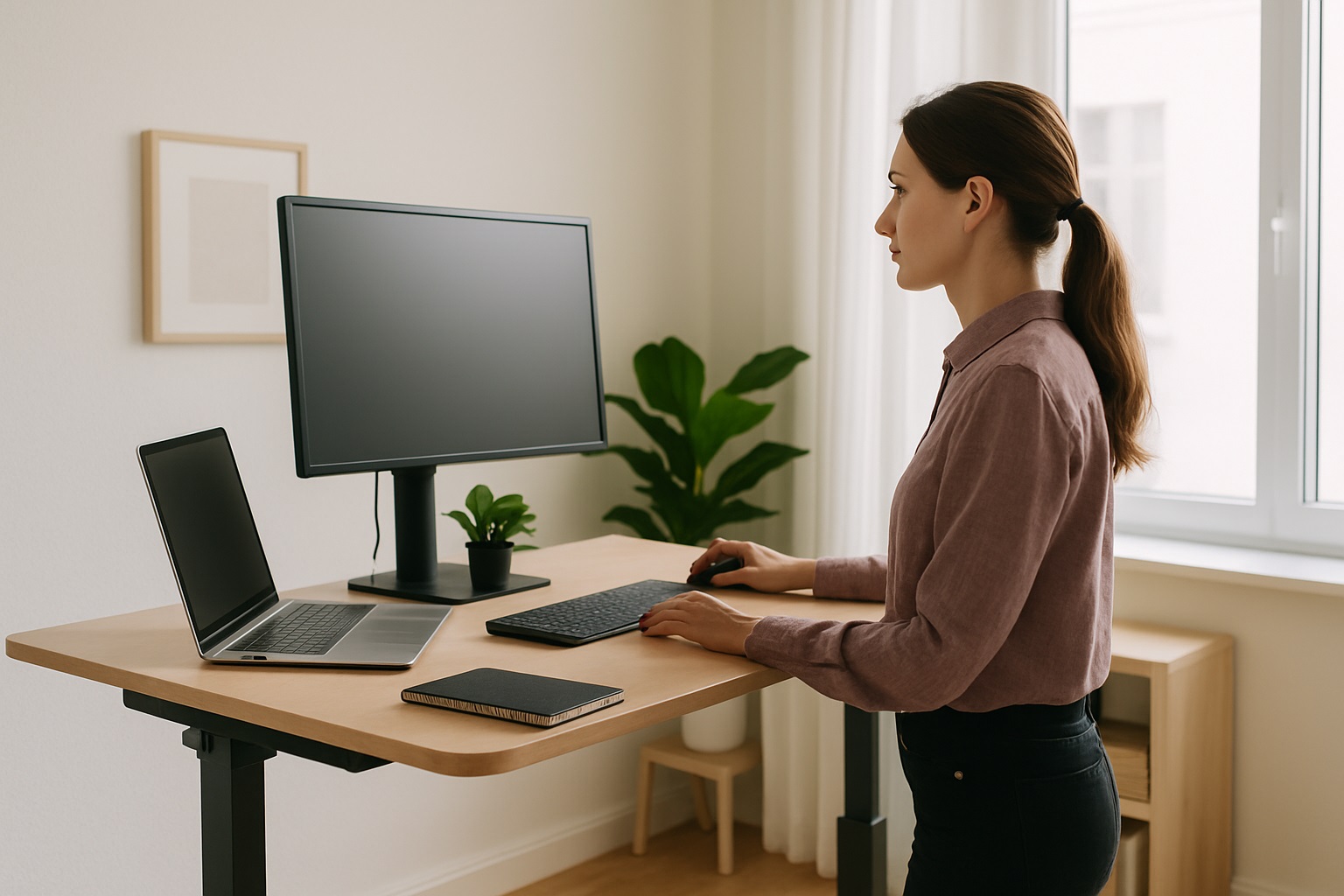
Rethinking the modern workspace
In a world where sitting has become the default position for work, transportation, and leisure, the health implications of a sedentary lifestyle are becoming harder to ignore. Prolonged sitting has been linked to numerous health issues — from back pain and poor posture to cardiovascular disease and reduced metabolic function. Enter the standing desk: a simple yet powerful tool that challenges the traditional desk setup. More than just a workplace trend, it represents a shift toward active, conscious working that prioritizes health without sacrificing productivity.
The health science behind standing more
Alternating between sitting and standing throughout the day can significantly reduce strain on the lower back and neck, improve circulation, and engage stabilizing muscles. When you stand, your body remains slightly more active — burning more calories, improving posture, and encouraging micro-movements that support joint mobility. It also reduces the risk of metabolic syndrome, a cluster of conditions that includes high blood pressure, excess fat around the waist, and elevated blood sugar. By simply changing position, you support your cardiovascular system and energy balance more effectively than you might expect.
Boosting mental clarity and focus
Physical movement is closely tied to cognitive performance. Standing intermittently helps prevent the mental fatigue that often sets in after long hours in a chair. Many users report increased alertness and sharper focus when using a standing desk, particularly during early mornings or post-lunch energy dips. This may be due to improved blood flow and reduced discomfort, both of which make it easier to maintain attention and stay engaged with work. Combined with ergonomic accessories like anti-fatigue mats or monitor risers, standing desks can create a workspace that promotes flow and comfort at once.
Making it work for you
Adopting a standing desk doesn’t mean abandoning your chair altogether. In fact, the best approach is to alternate between sitting and standing throughout the day — starting with short intervals and gradually increasing them as your body adjusts. It’s important to maintain proper posture, keep your monitor at eye level, and wear supportive footwear. Taking regular movement breaks, stretching, or even integrating light footwork or balance exercises can enhance the health benefits even further. The key is flexibility, not rigidity — making the desk work for your needs and rhythm.
