
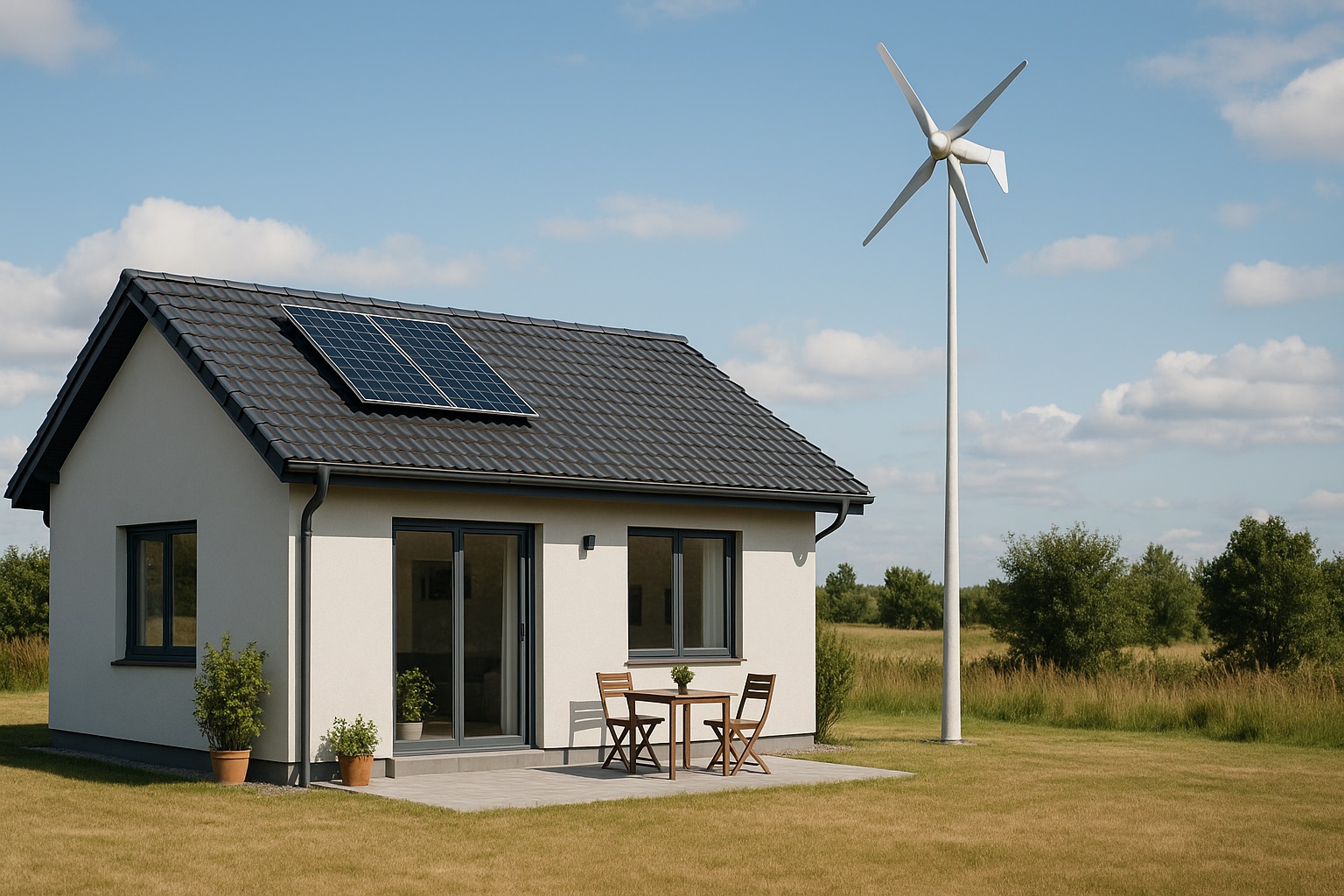
Small turbines, big potential
While large wind farms dominate the renewable energy conversation, small-scale wind power for residential use is quietly gaining ground. With modern designs that are quieter, more efficient, and easier to install, residential wind turbines are becoming a viable option for homeowners looking to reduce their dependence on the grid. Whether in combination with solar panels or as a standalone system, harnessing wind energy at home offers not only cost savings but also a direct contribution to a cleaner, more sustainable future — one gust at a time.
How home wind systems work
Small wind turbines typically stand between 5 and 20 meters tall and are installed in open areas with consistent wind speeds. They convert kinetic energy from the wind into electricity using rotor blades connected to a generator. The energy produced can be stored in batteries or fed into the home’s electrical system, offsetting the need for power from traditional sources. In areas where local regulations permit, excess energy can sometimes be sold back to the grid — turning the breeze into a source of passive income and resilience.
Sustainable and efficient energy
When positioned correctly and in the right climate, a residential wind turbine can produce a significant portion of a household’s energy needs. This reduces reliance on fossil fuels, cuts greenhouse gas emissions, and shrinks your energy bill. Unlike solar panels, which depend on sunlight, wind turbines can generate power day or night, and even during cloudy or stormy weather. This makes them an ideal complement to solar energy in hybrid systems — offering power generation around the clock with minimal environmental impact.
Challenges and smart placement
Wind power isn’t suited for every home. It requires consistent wind speeds (typically over 4–5 m/s), open space away from obstructions like tall buildings or trees, and compliance with local zoning laws. Initial installation costs can be high, and the turbines need occasional maintenance. But in the right setting — especially rural or coastal areas — the long-term benefits often outweigh the costs. Newer vertical-axis turbines are also helping bring wind power into suburban neighborhoods, offering compact, less intrusive alternatives to traditional models.
